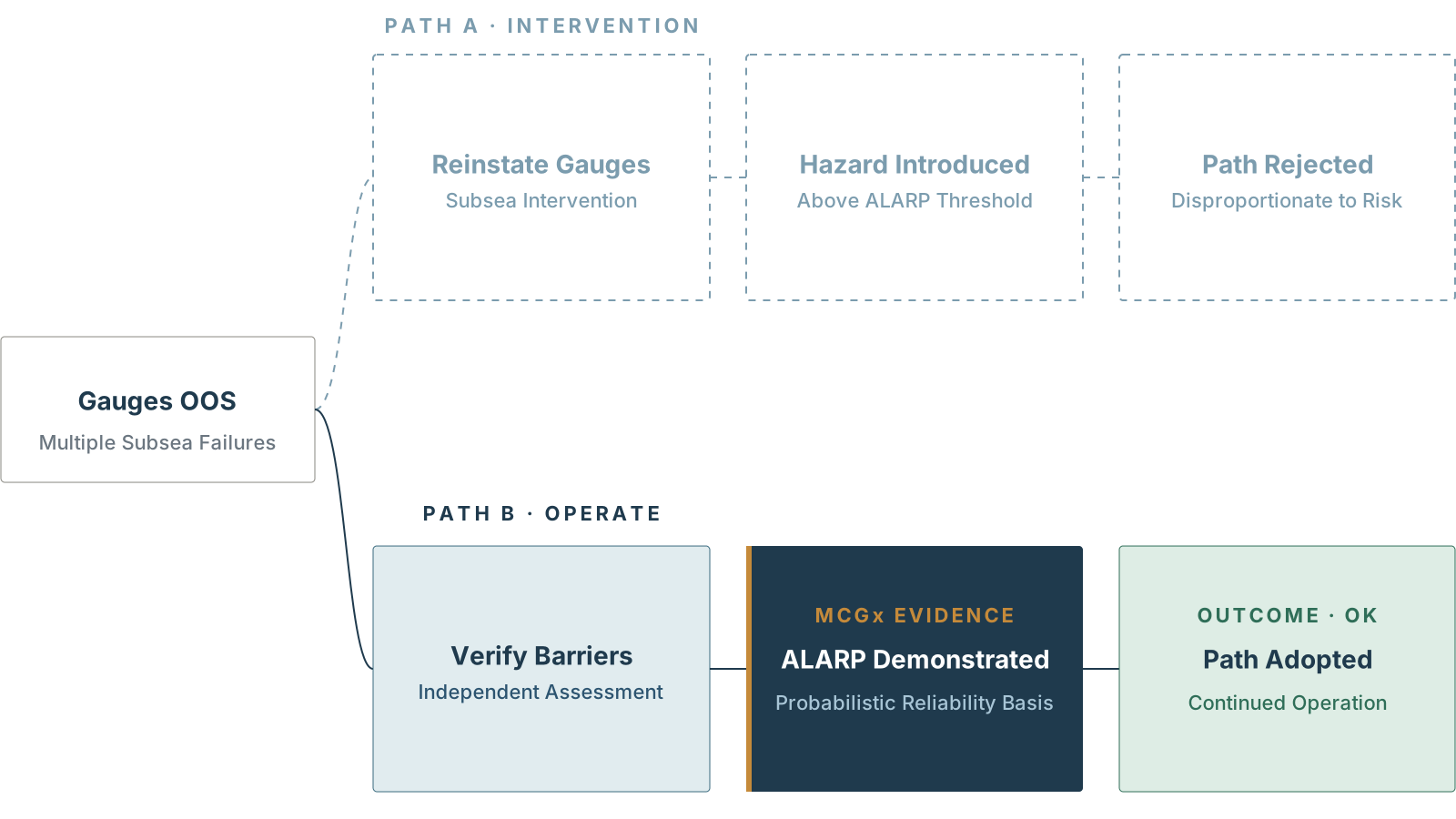
Result
MCGx demonstrated that 10 wells with failed subsea pressure gauges could continue operating safely while maintaining ALARP risk. The work avoided USD $40+ million in unnecessary subsea interventions on ageing infrastructure, delivered a defensible framework for managing future gauge failures, and preserved regulatory confidence, eliminating reactionary spending driven by perceived rather than actual risk.
Problem
Multiple pressure gauges had failed across the mature subsea portfolio, creating non-conformance with internal standards and triggering regulatory scrutiny. The operator faced mounting pressure to reinstate instrumentation through costly intervention. However, no quantitative framework existed to determine whether missing gauges materially increased loss-of-containment risk, or whether intervention itself would introduce greater hazard than the failures posed.
MCGx Insight
MCGx recognised that pressure gauges support verification but are not containment barriers. By mapping credible failure pathways across seven exhaustive gauge-failure scenarios, the work demonstrated that loss-of-containment risk remained ALARP when remaining barriers were verified through function testing and historical performance. For this specific asset configuration, subsea loss-of-containment detection relied primarily on visual observation and production instability rather than continuous pressure monitoring.
Proof
MCGx delivered an exhaustive risk assessment incorporating failure mode analysis, quantified consequence modelling, and operational-versus-intervention risk comparison. The work was formally signed by 12 cross-functional stakeholders and adopted as the basis for continued operation with gauges out of service.