Result
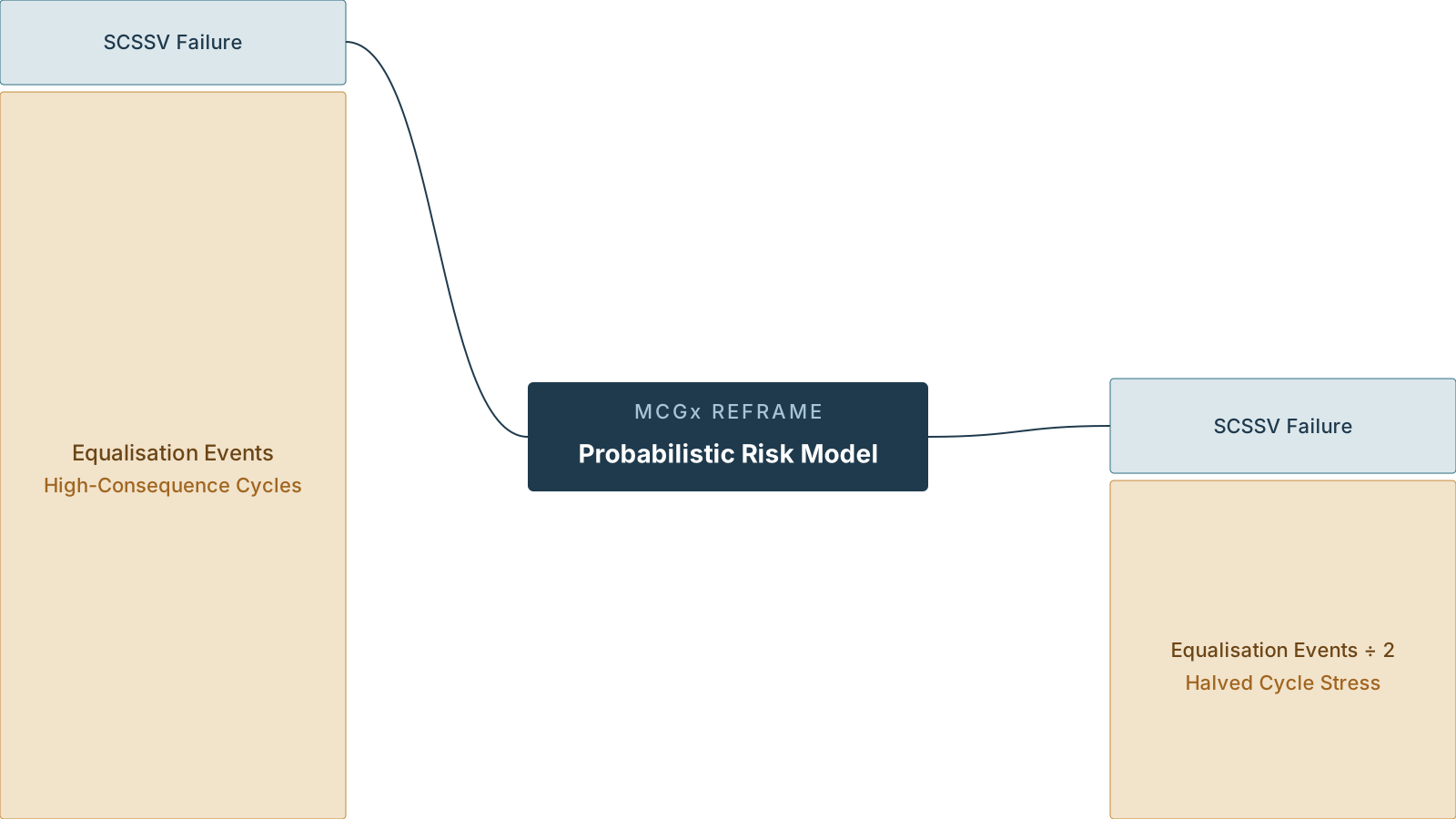
MCGx enabled a move from 12-monthly to 24-monthly SCSSV leak-off tests across a 13-well mature subsea asset, halving high-risk equalisation operations while preserving ALARP safety outcomes. The work eliminated recurring multi-well downtime, reduced cumulative stress on ageing flowlines and jumpers, and delivered ongoing annual savings of US$15 million, accepted by the regulator without modification.
Problem
Annual SCSSV leak-off testing was paradoxically increasing system-wide integrity risk. Each test required high-pressure equalisation via diesel or gas bullheading, inducing weeks of downtime on high-rate producers and subjecting ageing subsea infrastructure to rapid depressurisation cycles that risked flowline rupture and jumper blistering. No quantitative framework existed to assess whether testing frequency genuinely reduced blowout risk or simply amplified operational exposure.
MCGx Insight
MCGx developed a probabilistic reliability model using SINTEF failure data, fault-tree analysis, and asset operating history. The work revealed that SCSSV function tests, conducted six-monthly, verified approximately 90% of barrier performance, with leak-off tests addressing only the final sealing element. Extending LOT intervals from 12 to 24 months increased SCSSV failure probability by less than 5% while halving high-consequence equalisation events, shifting the risk balance decisively toward lower cumulative system exposure.
Proof
MCGx presented the probabilistic analysis and ALARP justification directly to the regulator, walking through fault trees, reliability calculations, and risk trade-offs step by step. The regulator accepted the extended test interval without modification. The framework was embedded into the asset’s well integrity surveillance plan and remains in continuous use across all 13 wells.